
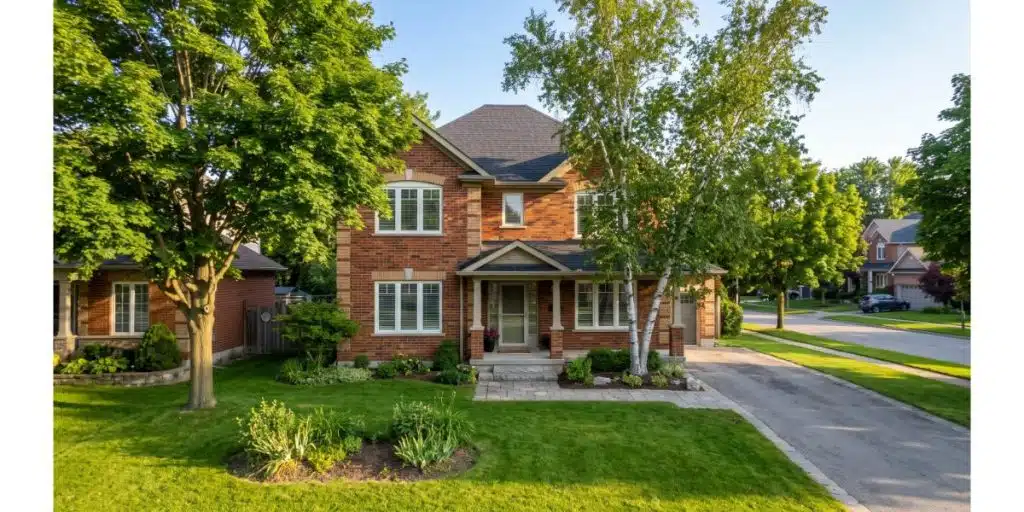
Working with private mortgage lenders in Ontario provides an alternative financing path when traditional banks or B-lenders are unable to approve your application. In Ontario, people usually use one for a year or two when the banks say no, then move back to a regular lender.
That’s the short version. The longer one comes down to when a private mortgage is worth the extra cost, and when I’d tell you to walk away.
Who private lenders are
Some are individuals lending their own money against your property. Others are mortgage investment corporations, or MICs, which pool money from many investors and lend it out as mortgages. There are also private lending companies that do mostly short-term, equity-based loans.
All of them lend mainly on your property and your equity (the part of your home’s value you own outright). They still look at your income and credit. They just weigh them less than a bank does.
When Using Private Mortgage Lenders in Ontario Makes Sense
Think of it as a bridge to get you somewhere else. The situations I see most often in London:
- Credit took a hit after a job loss, a separation, an illness or a run of missed payments
- You’re self-employed and your tax returns show less than you really earn
- There are property tax arrears or high-interest debts to clear, and the bank won’t refinance
- You’re facing power of sale (when a lender moves to sell the home after missed payments) and need time
- You’re buying before you sell and need short-term money
- A purchase closes in two weeks and your financing just fell through
Banks first, then B-lenders, then private
I don’t start with private. Banks and credit unions get checked first. Then B-lenders (alternative lenders with more flexible rules). Private comes after that, if neither fits.
Sometimes a private second mortgage, sitting on top of the mortgage you already have, works better than replacing the whole thing; you keep your current rate on the big balance and only pay private rates on the smaller piece. Whether that’s cheaper depends on your numbers, so I’ll show you both.
What one usually looks like
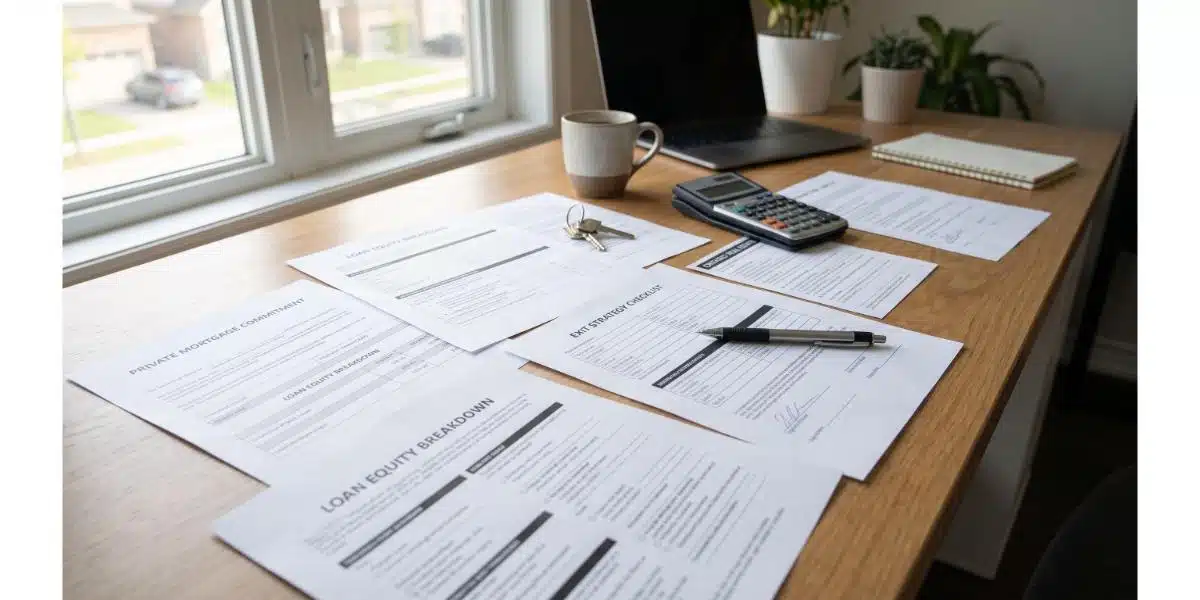
Every lender sets its own terms. Most private mortgages I arrange have a short term of one or two years, and the amount you can borrow depends on your equity. Some are interest-only, which keeps the monthly payment down. There are lender and broker fees on top of the interest, and you’ll need your own lawyer (the lender usually has one too).
They cost more than a bank mortgage. That’s the price of the flexibility. I don’t quote rates or fees in a blog post because they depend on your property, your equity and the lender, but before you sign you’ll see the full cost of borrowing in writing.
Start with the way out
Every private mortgage needs an exit plan, and we agree on it before anything is signed. Usually it’s one of these:
- Rebuild your credit so a bank or B-lender will take you at renewal
- File two years of tax returns that show your real self-employed income
- Sell the property
- Pay down debt until your numbers qualify again
I check in during the term to see how the plan is going. If credit is the reason you’re here, I explain how I help with rebuilding your credit so you can get back to a bank.
Questions to ask any private lender
- What’s the total cost, with every fee included?
- Is there a penalty if I pay it off early?
- What happens at the end of the term if I can’t refinance yet?
- Are the payments interest-only?
- Who do I call when I have a question about my mortgage?
If you can’t get plain answers to those, be careful. (Bank mortgages have early payout penalties too; I explain how mortgage prepayment charges work in another post.)
London and the towns around it
I arrange private and alternative mortgages for homeowners in London, St. Thomas, Strathroy, Woodstock and Ingersoll. Most of it happens over the phone or by video, and you can apply online. You can read more about how I arrange private mortgages in London and area.
Common questions
Do private lenders check my credit?
Most do. They care more about your equity and your plan, so a low score doesn’t automatically mean no.
How fast can a private mortgage close?
Usually faster than a bank. You still need an appraisal and the lawyers, so tell me your deadline on the first call.
Can I get a private mortgage if I’m behind on payments?
Sometimes, if there’s enough equity in the home. The earlier we talk, the more room there is to work with.
Is a private mortgage a bad idea?
Used for a short time with a real way out, no. Without a plan, it can go badly. For what it’s worth, I’d rather tell you a private mortgage is wrong for you than set you up in one that doesn’t fit.
If the bank said no
That’s one lender’s answer out of the 90+ I work with. Book a 15-minute call to compare traditional options with private mortgage lenders in Ontario and find the right fit for your situation. I won’t judge how you got here.
Mike Boniferro, Mortgage Broker, FSRA Licence #M18001301 | Dominion Lending Centres Elite Mortgage Group, FSRA #13669 | Independently Owned and Operated

